


 Back

Paul Yates of NewEdge Wealth discusses how yacht loans are structured, what lenders consider and how financing can fit into a broader acquisition strategy.
Yacht financing gives owners another way to structure an acquisition while maintaining liquidity for other investments and obligations. The appropriate structure can vary considerably depending on the yacht, the lender and the owner’s broader financial position.
Paul Yates has spent much of his career working with these transactions. He spent 11 years in private banking at Bank of America, where he was the number one loan producer in the marine space. He recently leveraged that experience to join NewEdge Wealth, where he is helping establish the firm’s Fort Lauderdale presence. A longtime collaborator with IYG, Yates is looking to deepen that relationship through his new venture.

Source: @chrisheadshots
How Yacht Financing Works Across Banks and Lenders
Yacht financing can take different forms depending on the lender and the financial profile of the owner. Interest-rate spreads, loan-to-value ratios, amortization periods, liquidity requirements and other covenants can vary considerably between institutions, making the structure of the loan as important as the rate itself.
At Bank of America, Yates was limited to a single lender’s terms. Not anymore. “Now I have the ability to look across multiple banks, and get terms from all different partners that we work with,” he says, noting that in his first two weeks at NewEdge he already had term sheets out with Goldman Sachs, Morgan Stanley and BNP Paribas. “We separate advice from custody or loans. We’re not beholden to a bank now, which is great.” NewEdge functions like a debt broker without the fee, he explains: “These debt brokers can charge one percent to go find the debt and place the debt. We don’t do that. We just make sure we’re placing the debt at the best, with the best terms, best covenants, best loan writing, and underwriting guidelines.”
You need to wrap your head around the fact that financing your yacht actually signals financial literacy
PAUL YATES
Managing Director at NewEdge Wealth
“A yacht is a depreciating asset, so it’s really smart to put debt on it, because you could let your money work elsewhere,” Yates says. Yacht loan rates are generally priced at a spread over SOFR or the federal funds rate, Yates says. The loan itself may be amortized over 15 to 20 years, while the actual loan term typically runs five to seven years.

Why High-Net-Worth Buyers Finance Yacht Purchases
Many high-net-worth buyers use financing to maintain liquidity and keep capital available for other investments. The calculation ultimately comes down to the cost of borrowing, the terms of the loan and how the owner prefers to deploy capital elsewhere. “Nine times out of ten it’s all strategic, because these buyers understand debt and how to use leverage,” Yates says. “They know that their money can get a positive arbitrage on something else.”
In practice, that calculation comes down to the cost of borrowing relative to what that capital can earn elsewhere. He walks through the math: on a $10 million purchase with 70 percent financed, the buyer keeps $7 million invested elsewhere. “That $7 million can go earn twelve percent, and now you’ve got a positive income on the seven, instead of putting all ten million of cash and not taking leverage.” The example illustrates why the financing decision extends beyond the purchase itself. The benefit depends on the borrowing cost, investment performance and the owner’s broader financial strategy.
Financing a Brokerage Yacht vs. a New-Build Yacht
The financing process differs depending on whether the yacht is a brokerage purchase, a completed new build, or under construction.
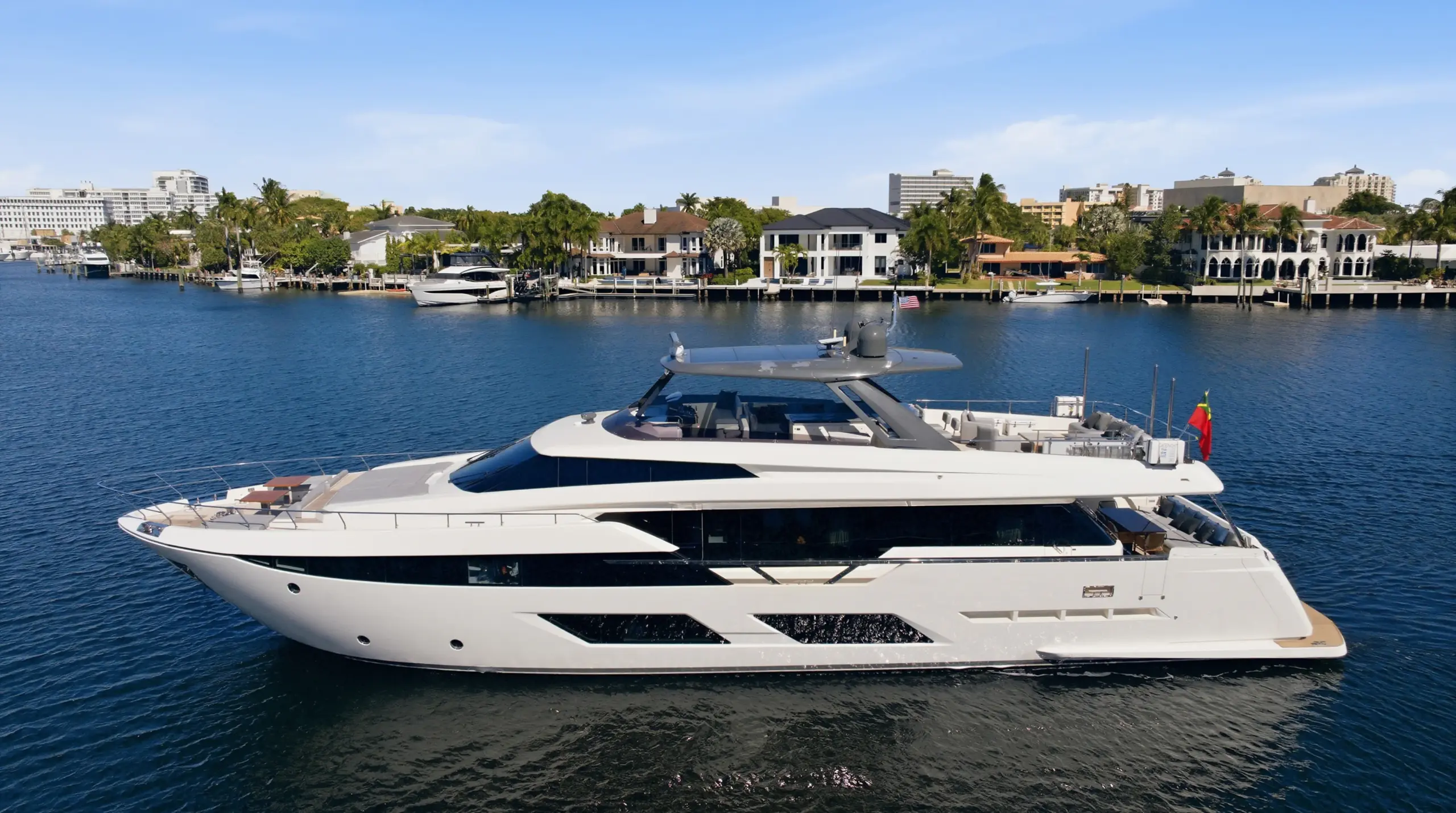
Financing a Brokerage Yacht
For a brokerage yacht purchase, the financing timeline needs to align with the purchase agreement, survey, insurance process and closing requirements. On a brokerage deal, Yates likes to get involved before the contract is signed so he can flag realistic timing. “I like to say 45 to 60 days and come in under that,” he says, referencing the time it takes for surveying, underwriting, term sheets, insurance, and closing.
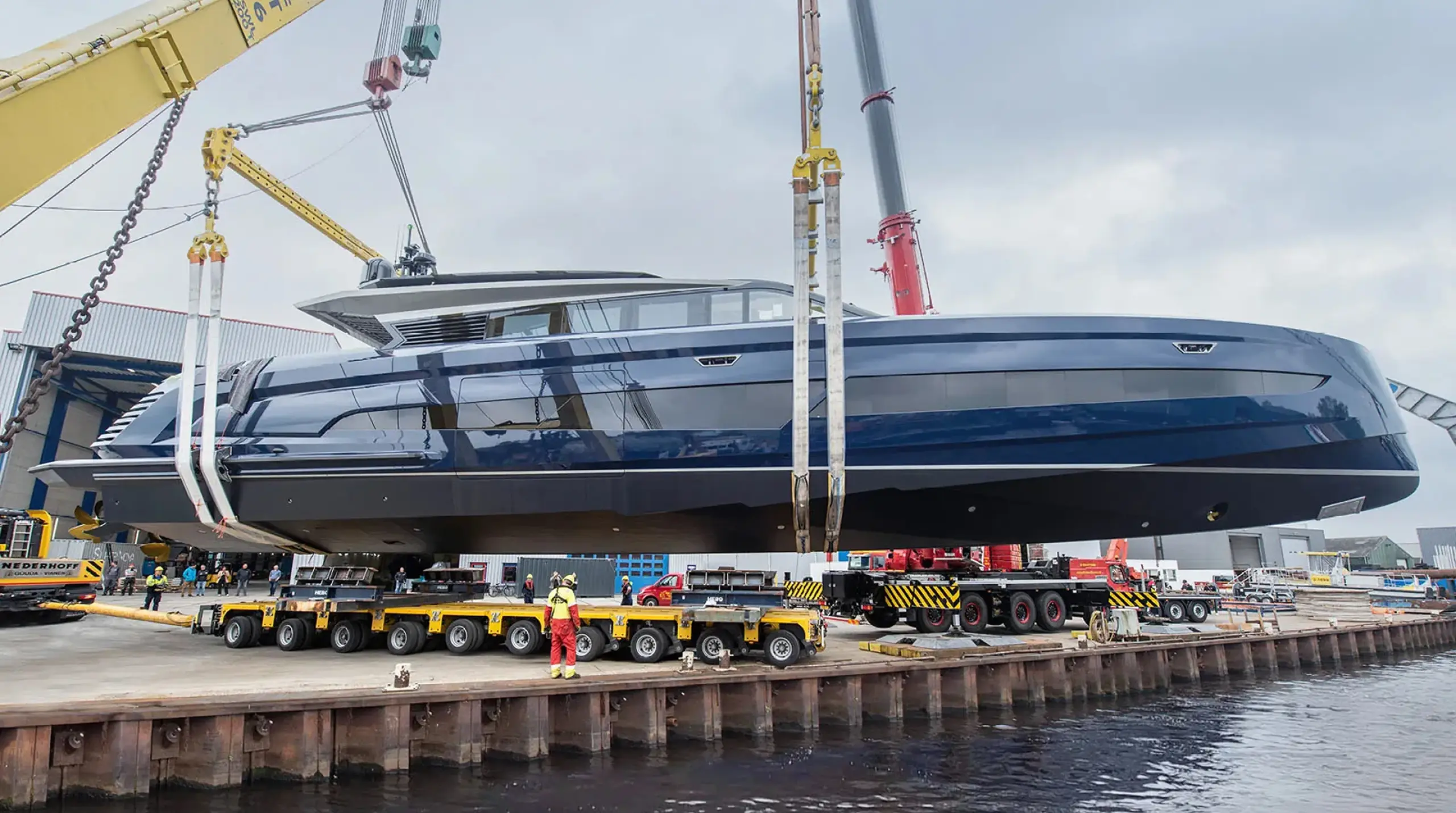
Source: Vanquish Yachts
Financing a New-Build Yacht
New-build financing introduces additional considerations, including the construction schedule, shipyard, contractual structure and timing of payments throughout the build. New construction moves on a longer timeline. “It takes about six months from the signing of a contract to underwriting,” he says, adding that Bank of America wouldn’t finance a build cycle shorter than two years given the number of parties involved; bank counsel, an English-law attorney in London, and the shipyard itself. Construction loans typically carry a 70 percent loan-to-value ratio, including a buffer for change orders, and stay interest-only through the entire build.
What Factors Affect Yacht Loan Terms?
A yacht’s age, builder, warranty status and overall profile can influence the structure a lender is willing to offer. Shipyard reputation can become particularly important in a new-build transaction, where the lender is also considering the financial stability and location of the yard. A yacht’s age, builder and pedigree all factor into terms. “We don’t like anything really more than 20 years old,” Yates says, though older yachts with a strong builder pedigree can still qualify at a shortened amortization.
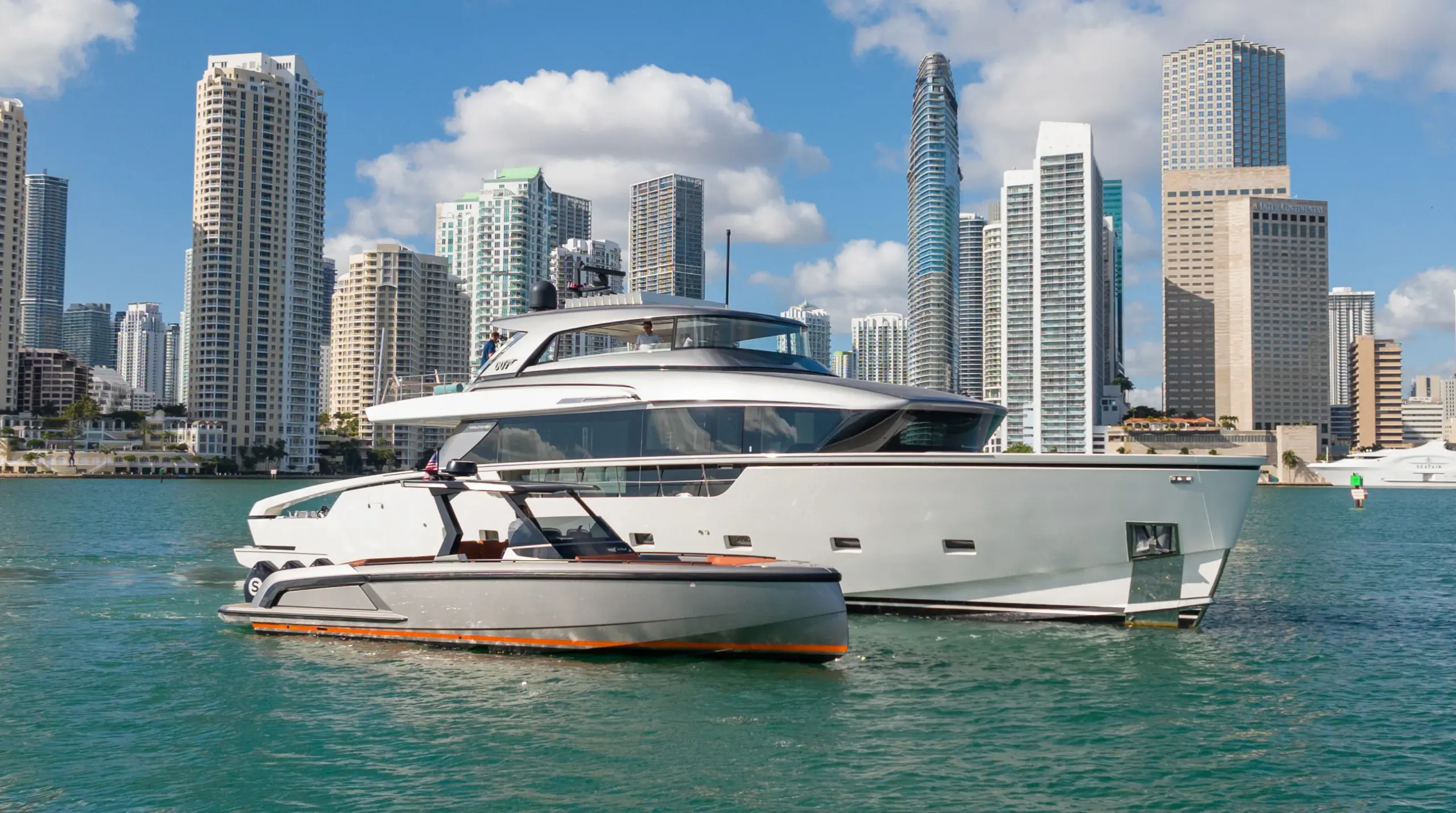
Shipyard reputation matters too. Yates says lenders quietly pass on yards with financial instability or that operate in unstable regions. Newer boats still under warranty can command higher loan-to-value ratios than older brokerage yachts, he notes, and even tenders can be rolled into a deal: “Anything under $100,000, you’re going to pay cash for, but substantial tenders—a couple hundred thousand, or up to a million and more—they don’t mind including in the deal.”
Can You Refinance a Yacht Purchased With Cash?
Yes. According to Yates, refinancing a yacht originally purchased with cash generally follows the same underwriting process as financing a brokerage yacht purchase.
What You Need to Qualify for Yacht Financing
Underwriting varies by lender, but liquidity, net worth and the owner’s broader financial picture generally shape the terms available. The yacht also matters, including its age, valuation, builder and insurance profile.
Preparation makes the biggest difference in how smoothly financing goes. “Have a file with a personal financial statement all readily available, including your most recent investment accounts, bank account statements, and tax returns,” Yates advises. “When you send me a completed file quickly, I’m able to turn around term sheets in 24 hours.”
He recommends bringing a financing professional into the conversation before signing a contract. That gives the owner and broker a clearer sense of the available terms and a realistic timeline before contractual deadlines are established.
Common Misconceptions About Financing a Yacht
Yates says many owners use financing as part of a broader strategy for managing liquidity and leverage. “You need to wrap your head around the fact that financing your yacht actually signals financial literacy,” he says. In his experience, roughly 75 percent or more of buyers spending $20 million or more finance at least part of the purchase.
Financing also needs to be considered alongside the ongoing cost of ownership. Yates’s rule of thumb is to budget roughly 10 percent of the yacht’s value annually for operating costs. On newer yachts with lower maintenance and insurance costs, he says that figure can sometimes be closer to 7 percent.

How Much Should You Finance on a Yacht?
There is no single loan-to-value ratio that is appropriate for every yacht buyer. The appropriate structure depends on the owner’s liquidity, tolerance for leverage, broader investment strategy and the terms available from the lender. Yates generally cautions against borrowing too aggressively against the asset. “The biggest thing I’ve encountered was doing too high a loan-to-value ratio,” he says. “If you stay at 70 percent, chances are when you sell, you’re fine.”
The lender matters as much as the headline rate. Liquidity requirements, net-worth tests, debt-service requirements and other covenants vary from bank to bank, and a strong, liquid client may have room to negotiate terms that better reflect his or her financial position.
His advice for an owner considering yacht financing for the first time is simple: get ahead of it. “Every deal is so personal,” Yates says. “You need to find out what your tolerance is. What’s going to allow you to fall asleep at night and not worry about making the payment?” Bringing the financing conversation forward can also help the broker, lender, insurer and other advisors coordinate around the acquisition timeline. For an owner, that means fewer variables are left to resolve once contractual deadlines begin.
Frequently Asked Questions About Yacht Financing
For a brokerage yacht purchase, Yates recommends allowing approximately 45 to 60 days for surveying, underwriting, term sheets, insurance and closing. Timing can vary depending on the yacht, lender and complexity of the transaction.
Yes. New-build financing may involve a construction loan with interest-only payments during the build. The structure will depend on the owner, shipyard, construction timeline and lender requirements.
Yes. According to Yates, refinancing a cash purchase generally follows the same underwriting process as financing a brokerage yacht acquisition.
