


 Back

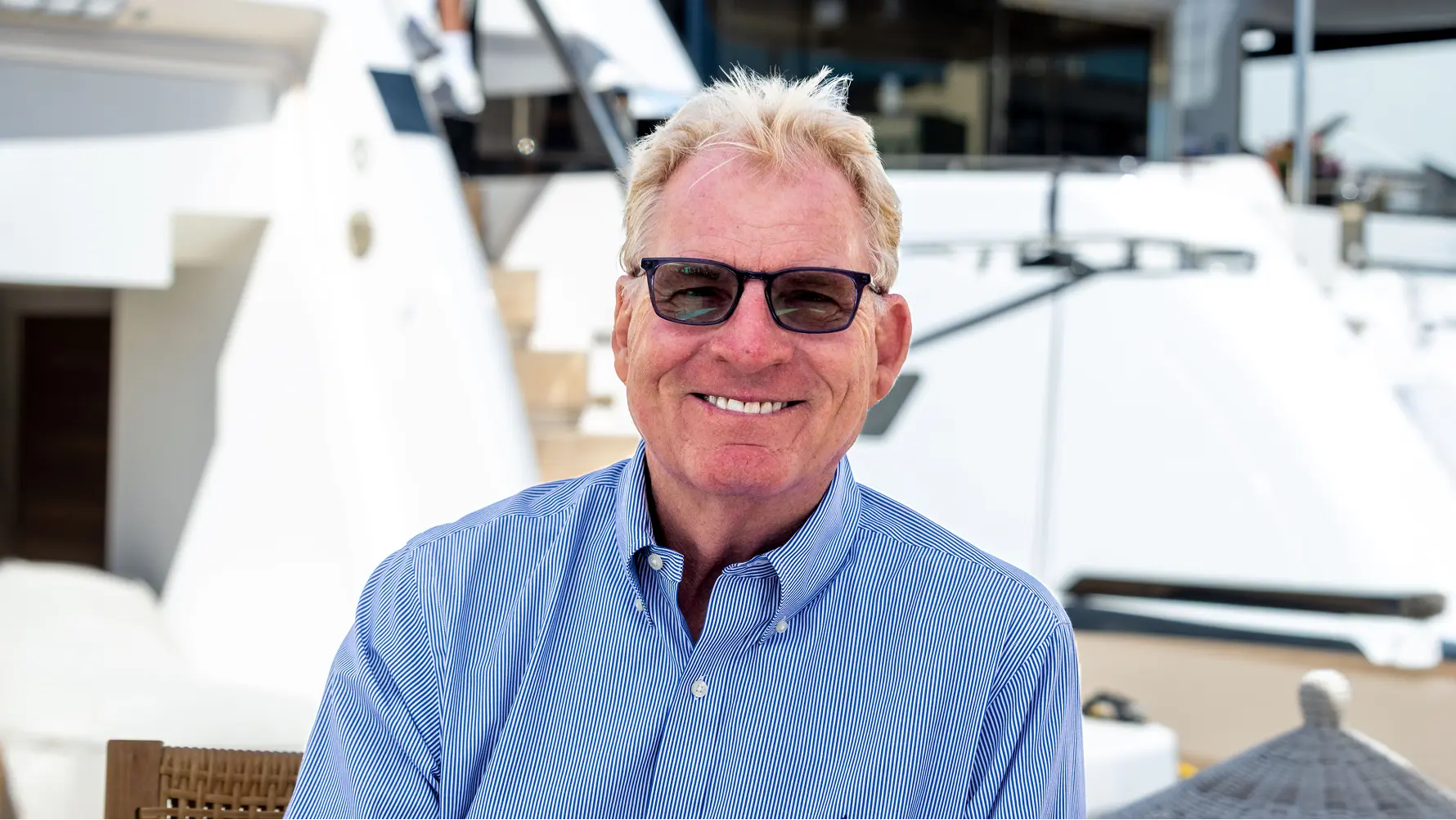
Insight from George Jousma, President, Italian Yacht Group
A 90-foot Italian flybridge and an 800-foot freighter would seem to have little in common. Cross a certain line on the tonnage scale, however, and the regulations governing them begin to look surprisingly similar. That line, along with several other considerations, shapes a question that comes up in most larger yacht purchases: whether to register the yacht under the U.S. flag or a foreign one.
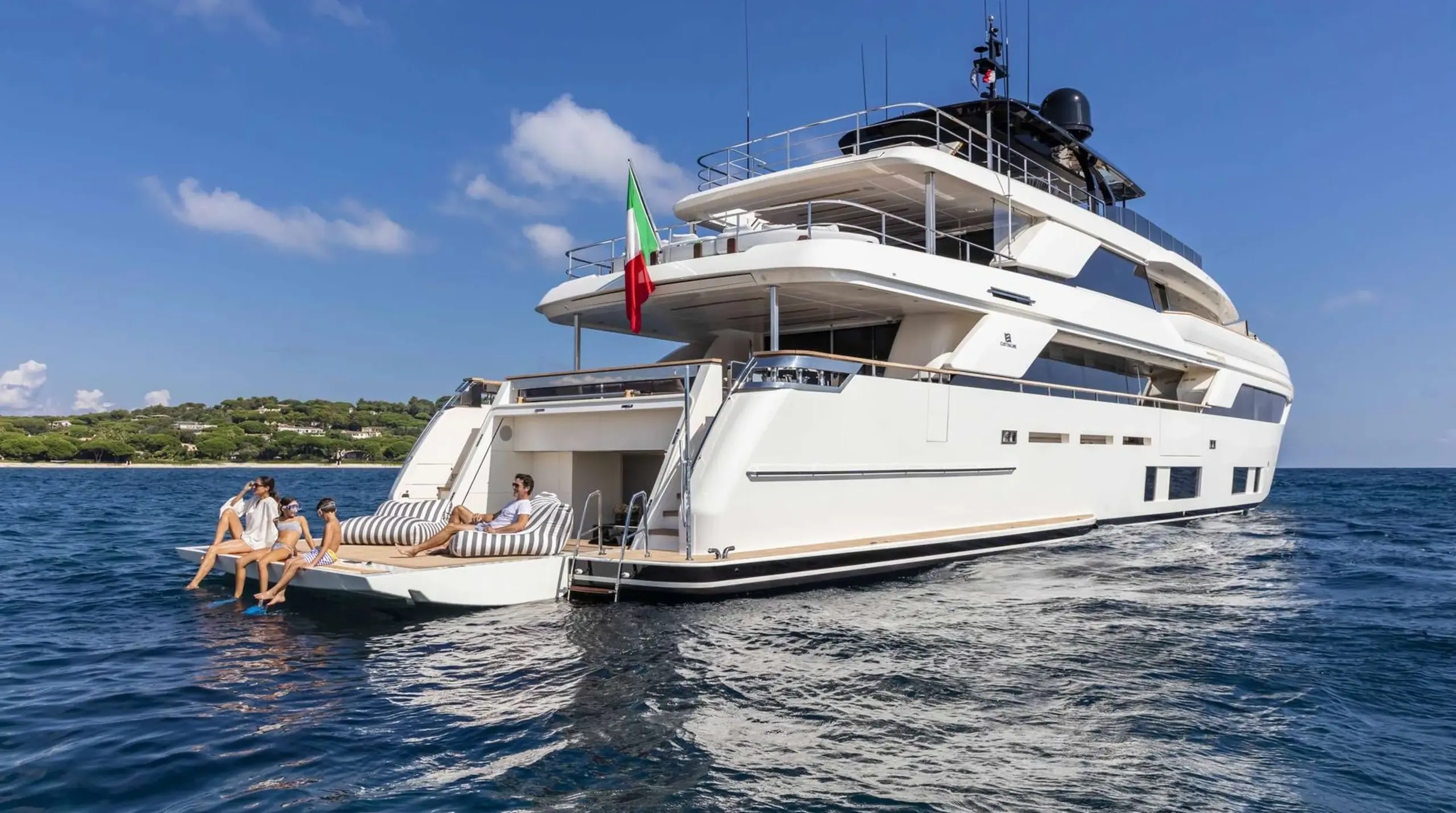
Foreign flagging is simple to define. It means registering a yacht under a country other than the owner’s home country. Executing that decision well is more involved. Flag selection affects customs treatment, crew recruitment, charter operations, and ownership structure, and it is usually settled before a yacht changes hands.
No single flag suits every yacht or owner. The right choice depends on the yacht’s size, where it will operate, how it will be used, and how ownership is structured. Five factors commonly shape the conversation.
Key considerations:
- Gross tonnage can have a significant effect on the regulatory requirements associated with U.S. flagging.
- A cruising license allows a foreign-flagged, foreign-built yacht to defer U.S. duty, with restrictions on how the yacht is used while in U.S. waters.
- A foreign flag makes chartering in the Bahamas and the Caribbean considerably easier for the owner.
- A foreign flag opens crew recruitment to internationally trained captains and crew.
- Flag selection is usually decided alongside the yacht’s ownership entity and asset-protection structure.
1. Larger Yachts Can Change the Flagging Conversation
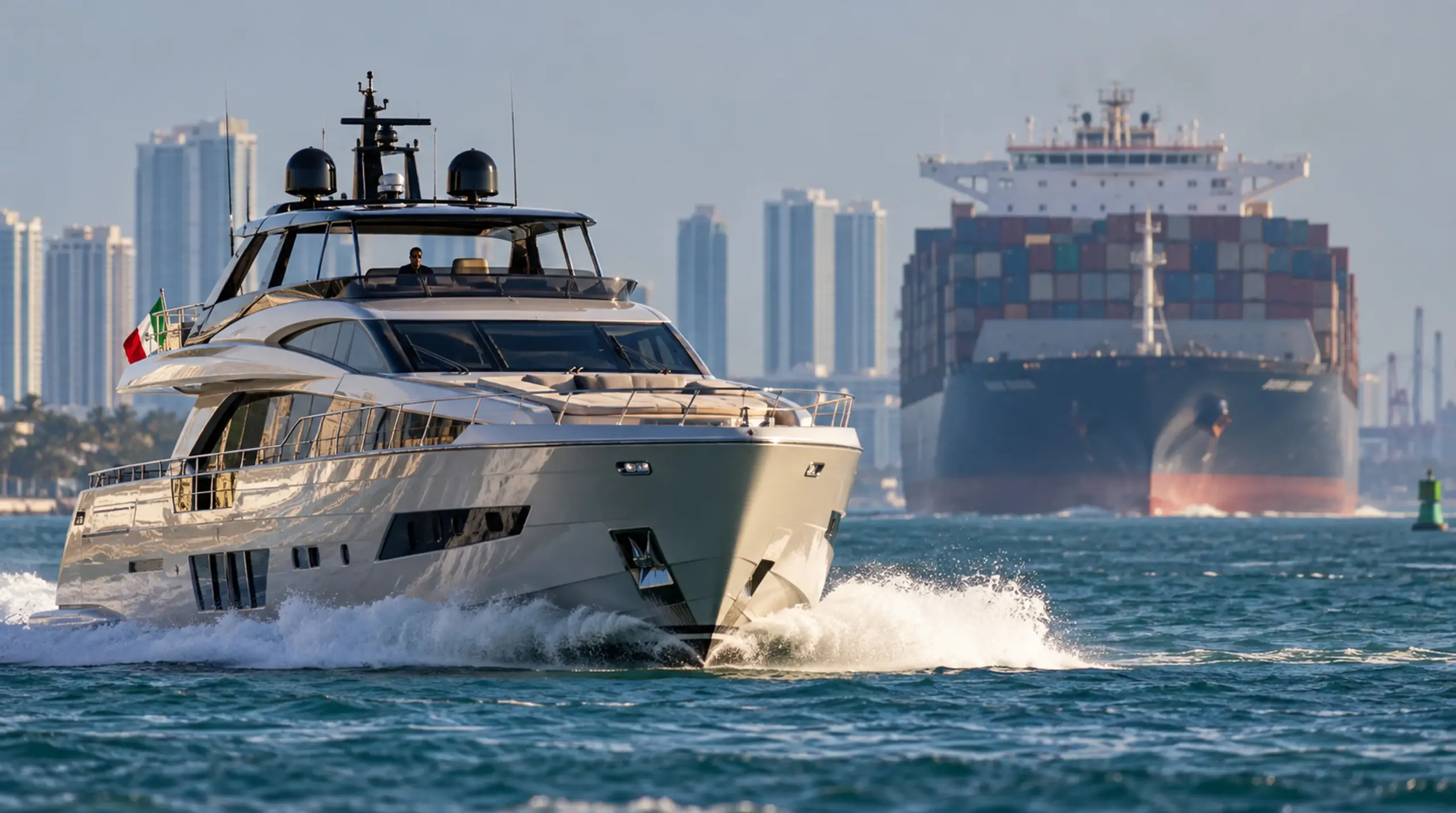
Length is the number most owners reach for first, but gross tonnage can be more important when evaluating the regulatory implications of flagging a larger yacht. A yacht can technically be documented under the U.S. flag at significant size. As gross tonnage approaches and exceeds certain regulatory thresholds, however, the requirements associated with U.S. documentation and operation can become substantially more demanding.
You’re kind of falling into the same category as an 800-foot freighter,” Jousma says, “with regard to maritime regulations.
George Jousma
IYG President
The comparison illustrates why gross tonnage deserves attention during the acquisition process. Larger yachts can become subject to regulatory requirements that are more commonly associated with commercial shipping, making foreign registration a common consideration for larger private yachts.
Gross tonnage measures enclosed volume. Interior volume, beam, and superstructure all feed the calculation, so two yachts of similar length can land in different regulatory categories. Italian builders tend to favor generous interior volume, which means an Italian-built yacht can cross the 299 GT line at a length that would seem unremarkable on paper. For a prospective buyer, gross tonnage belongs alongside range, draft, and layout in the initial evaluation of any yacht near that size.
2. U.S. Duty and Customs Planning
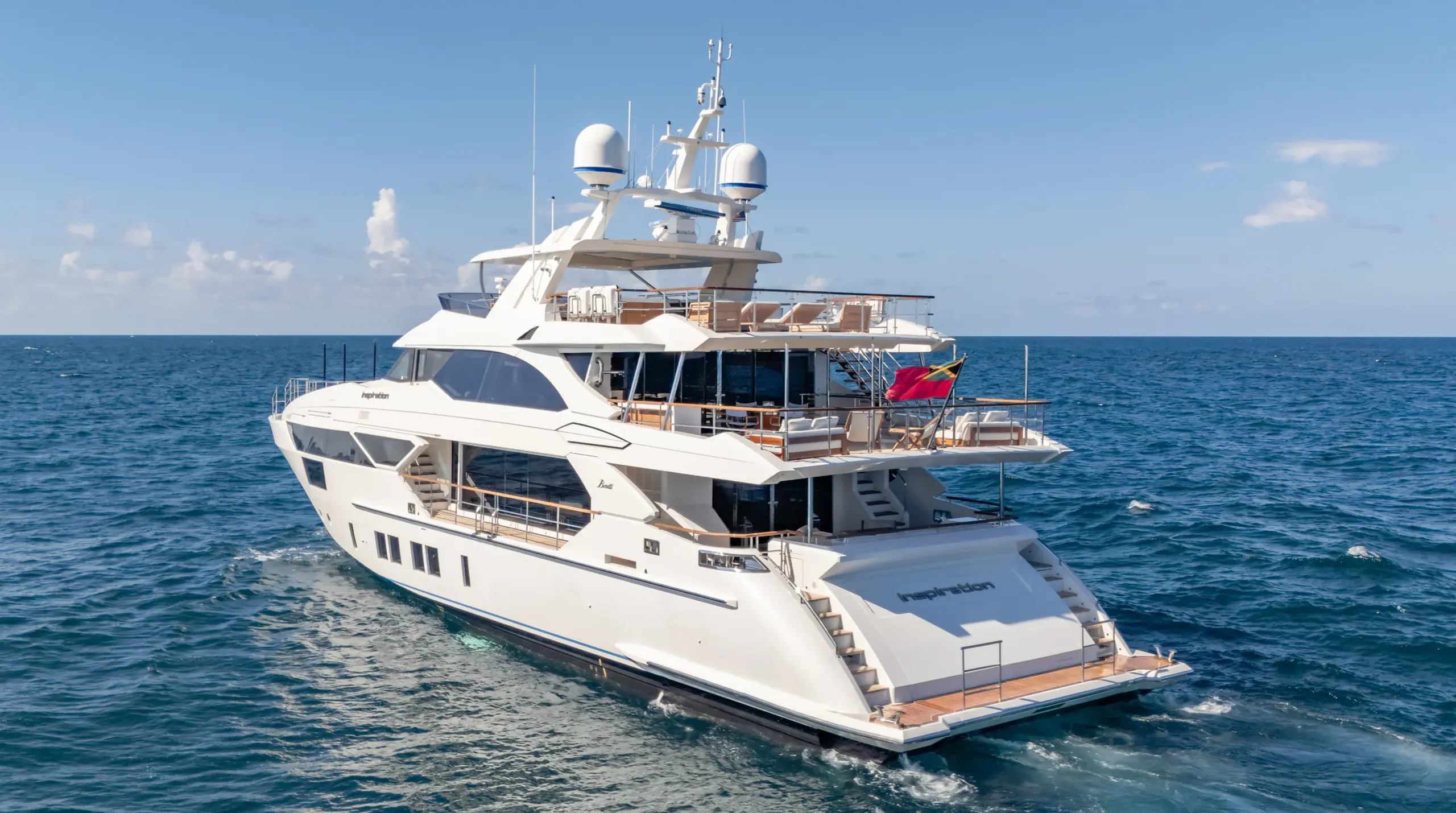
For a foreign-built yacht, customs status is the second half of the flagging conversation, and the two are closely linked. A foreign-built yacht arrives in U.S. waters in one of two ways:
- Formal importation. Duty is paid on the yacht’s value. Once imported, the yacht can be documented under the U.S. flag, offered for sale to U.S. buyers, chartered, and kept in U.S. waters indefinitely.
- A cruising license, commonly called a cruising permit. The yacht remains unimported and is treated as a visiting guest. Duty is deferred, and the yacht is limited to private use while in the country.
A cruising license requires a foreign flag from a country that extends the same courtesy to U.S.-flagged yachts. Italy is on that list, as are the registries U.S. owners most often choose, including the Cayman Islands, the Marshall Islands, and the Bahamas. A U.S.-flagged yacht must be imported, so the choice of flag settles the customs question at the same time.
The duty on a foreign-built yacht was 1.5 percent for decades and has risen considerably since 2025. “Duty and tariff are exactly the same thing,” Jousma says. “Nothing has changed with the rules. The only thing that’s changed is the amount.” That increase has made the cruising license route more common on larger yachts, and it has made the accompanying restrictions more important to understand.
“If you have a foreign-flagged yacht that has not been duty paid, you cannot offer it for sale to a U.S. resident and you cannot offer it for charter,” Jousma says. “Those are income-generating activities.” The yacht must also leave U.S. waters for roughly two weeks each year before a new license is issued, and the captain notifies Customs and Border Protection when moving between U.S. ports, even from Miami to Palm Beach. “It’s just not a big deal,” Jousma says. “You just have to do it.” Owners who intend to sell an unimported yacht have two established options: keeping it in a free trade zone, or showing it under a boat show bond. Both have their own rules, and an experienced broker will have raised them before an offer is drafted.

3. More Flexibility for International Charter
Owners considering a charter program should weigh flagging early, because the rules turn on where the charter takes place.
- In U.S. waters, the governing law is the Passenger Vessel Services Act. Carrying paying guests between U.S. points requires a coastwise-qualified yacht, meaning one that is U.S.-built, U.S.-flagged, and U.S.-owned. An Italian-built yacht fails the first test regardless of flag or duty status. The available route is a bareboat charter, in which the charterer takes possession of the yacht and hires the crew separately.
- Outside U.S. waters, the balance shifts toward the foreign flag. A U.S.-flagged yacht carrying more than a handful of paying guests must be inspected and certified by the Coast Guard under standards written for commercial passenger ships. Registries such as the Cayman Islands and the Marshall Islands maintain commercial yacht codes written for large yachts that charter, with survey, safety, and crew certification requirements that are rigorous and built for the purpose.
The Bahamas requires a charter permit and collects a fee on charter revenue, several Caribbean nations have their own licensing rules, and registries differ in how easily they accommodate charter. Which flag suits a charter-focused yacht is a conversation for the broker and maritime counsel before closing.
4. Greater Flexibility When Hiring International Crew
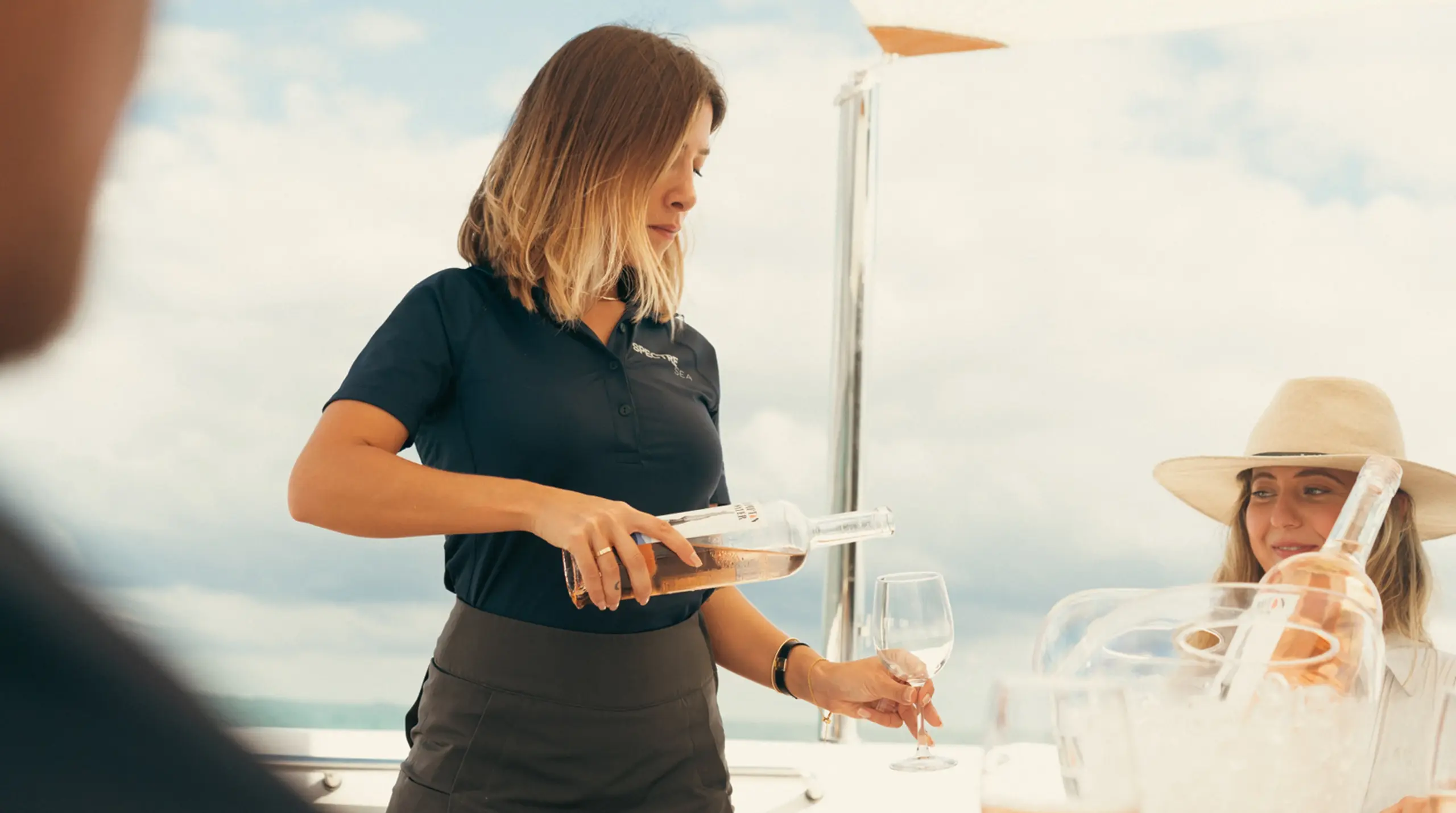
“When’s the last time you were on a yacht of 100 feet or larger that didn’t have crew from somewhere other than the United States?” Jousma asks.
The reason is structural. “In the U.K., South Africa, New Zealand, Australia, yachting is considered a career,” he says. Those countries have maritime academies and certification tracks that produce captains, engineers, and interior crew trained specifically for the role. The United States has no equivalent pipeline, and many American crew come to yachting for a few seasons after school before some of them decide to stay.
A U.S.-flagged yacht must employ crew who are legally able to work in the United States, and its master must be a U.S. citizen. A foreign-flagged yacht can hire from the international pool, because the crew’s presence in U.S. waters is tied to the yacht’s cruising license. They may work only aboard that yacht, and their compensation typically runs through a yacht management company or crew agency that handles cross-border payroll. “It’s a huge benefit to be able to open up your opportunities with who and what you hire,” Jousma says.

5. Ownership Structure and Asset Protection
For most owners, the flag is one piece of a broader ownership structure developed with legal and tax counsel.
“In most situations you would own the yacht in a single-asset corporation,” Jousma says. “The only asset is the yacht, which means the only thing at risk is the yacht and its value.” Registering that corporation offshore, typically in the flag jurisdiction, adds a further step between a claimant and the owner’s other assets. “Having it foreign-flagged and owned in a foreign corp is just another layer of asset protection.”
The pairing is common but no longer required. A U.S. entity can now own a foreign-flagged yacht, which Jousma describes as a relatively recent change. The structure that makes sense depends on the owner’s circumstances, which is why it is built with counsel rather than copied from another owner’s arrangement.
Weighing the Factors Together
These five factors interact. A yacht above 299 GT will carry a foreign flag whatever the owner’s other plans. A yacht that will charter in the Caribbean points the same way. Geography matters too: a Florida-based owner on a cruising license can clear to the Bahamas for the annual two weeks with little disruption, while a Northeast owner who never intends to go south faces a longer trip. One IYG client with an 8-figure yacht used primarily for day cruising in the Northeast solved that by clearing in Nova Scotia in October.
Unwinding a flag or ownership decision after closing means reopening financing, insurance, and legal documents already in place, so these questions belong early in a well-run acquisition. IYG has been part of that conversation at the industry level as well. Jousma served two terms as president of the International Yacht Brokers Association, and the association’s work to cap Florida’s sales tax on yacht purchases in 2011, a change other states later followed, was driven in part by how many transactions were being structured offshore.
Italian-built yachts are, by definition, foreign-built for U.S. customs purposes, so the flag conversation surfaces in nearly every transaction of this kind. A yacht’s paperwork rarely gets discussed with the same enthusiasm as its layout or its range, but at this level it deserves nearly as much attention up front. Understanding the yacht is one part of the purchase. Understanding where it will operate, who will crew it, whether it will charter, and how ownership will be structured is what tells a broker, and an owner, which flag makes sense.
Frequently Asked Questions
Foreign flagging means registering a yacht under a country other than the owner’s home country. For U.S. owners, the most common choices are the Cayman Islands, the Marshall Islands, and the Bahamas, each of which offers an established registry, recognized safety codes, and access to a U.S. cruising license.
It means the owner defers it. A foreign-flagged yacht that enters under a cruising license remains unimported, so duty is owed only if the yacht is later imported. That happens when the owner decides to sell to a U.S. resident, charter in U.S. waters, or keep the yacht in the country beyond what the license allows.
Up to one year. The yacht must be used privately, must stay off the market for sale or charter to U.S. residents while on the license, and must leave U.S. waters for roughly two weeks before a new license is issued.
A U.S.-documented yacht must have a U.S. citizen as its master, and crew working aboard need U.S. work authorization. A foreign-flagged yacht can employ captains and crew from anywhere, including the United Kingdom, South Africa, Australia, and New Zealand, where yacht crewing is a structured career with formal training and certification.
It depends on size, cruising plans, charter intentions, and how ownership is structured. A yacht under 299 GT that will stay in U.S. waters, run an American crew, and never charter may be well served by a U.S. flag. A larger yacht, one that will charter internationally, or one owned through a foreign entity usually points toward a foreign registry. Working through those questions before the purchase produces a flag choice that holds up for the life of the ownership.
